Taking advantage of the premiere of the magnificent ‘Nouvelle Vague’, by Richard Linklater (already reviewed in our Gijón Festival chronicle), we propose a top of films from the famous French movement that promoted the arrival of modernity – in terms of cultural history, of “linguistic consciousness” – to cinema. This is not a canonical selection, but a personal one, taking into account a criterion that I consider fundamental when evaluating films from the past outside the strictly historiographical scope: their relevance in the present, that is, how time has passed through them.
First, for those who want to expand their knowledge, I recommend what, in my opinion, is the best book published in Spanish on the subject: ‘Around the Nouvelle Vague: ruptures and horizons of modernity’ (VV.AA., 2002).
The Four Hundred Blows (François Truffaut)
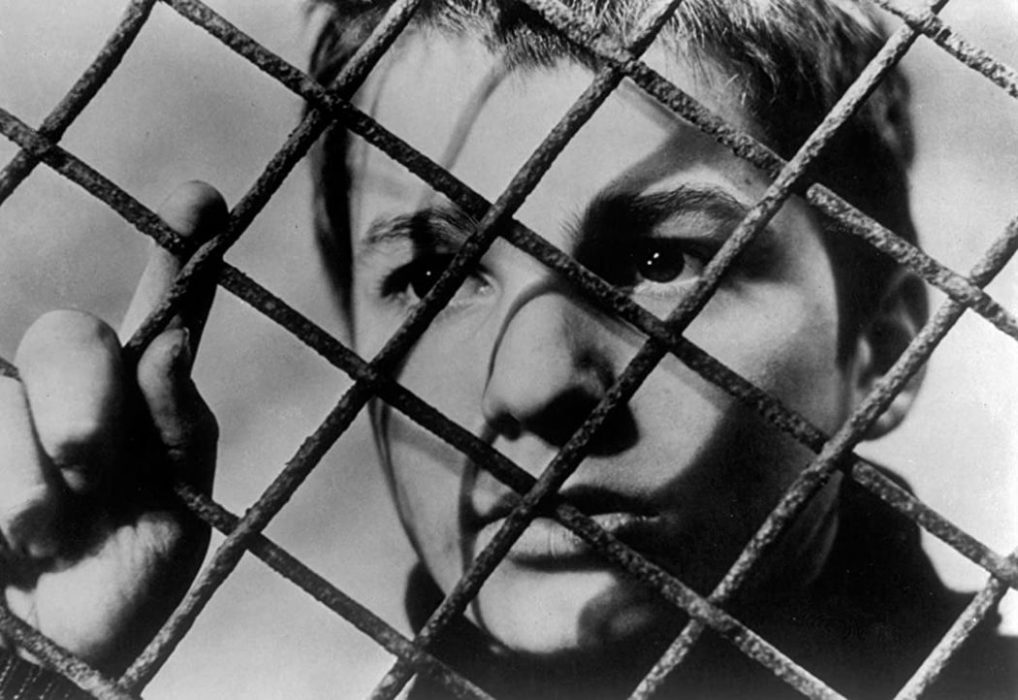
It all started with her. Without the impact that François Truffaut’s debut had at the 1959 Cannes festival, where he won the award for best director, perhaps the movement would not have been articulated in such a cohesive way, with the five critics of Cahiers du Cinéma – Truffaut, Jean-Luc Godard, Éric Rohmer, Claude Chabrol and Jacques Rivette – debuting in the feature film practically at the same time. Location filming, naturalistic interpretations, mobile camera, open narration… ‘The Four Hundred Blows’ (1959) impressed (and continues to impress) with its astonishing creative freedom and extraordinary dramatic sensitivity. Sensibility that would find a more openly lyrical and romantic extension in another milestone of the movement: ‘Jules and Jim’ (1962).
Available: Filmin.
At the end of the getaway (Jean-Luc Godard)
If Truffaut illuminated modern cinema, Godard strobed it and applied electric shocks to it. With his incredible debut, ‘At the End of the Break’ (1960), which over time became the most emblematic film of the nouvelle vague (and the coolest), the Franco-Swiss filmmaker dynamited traditional film grammar, the so-called “institutional mode of representation”, with an infectious audacity, freshness and enthusiasm. In the film, the fetishistic love for classic cinema, the full emergence of modernity and the prefiguration of postmodernity coexist. Everything that would make Tarantino famous in the 90s, Godard had already anticipated in the 60s (not by chance, the former named his production company A Band Apart). Watching this film and then Linklater’s is the culmination of cinephile joy.
Available: Filmin, Movistar+, Flixolé
Band Apart (Jean-Luc Godard)
Godard’s creative explosion in the 1960s, until he separated from his wife and muse Anna Karina and became a Maoist, is astonishing. Few filmmakers have demonstrated a comparable ability to generate iconic sequences, images destined to endure beyond the story itself. ‘Band Apart’ (1964) contains two of the most famous and narratively significant scenes in the history of cinema, authentic pop poetry: the dance in the cafe, which functions as a performance, a lyrical, playful and self-conscious fugue that suspends the narrative progression and subverts the dramatic logic of the film, inaugurating a form of digression that would later be widely imitated; and the race through the Louvre museum, an apparently childish prank that actually hides a powerful political discourse full of irreverence, almost an act of punk transgression.
Available: Filmin, Prime Video
My Night with Maud (Éric Rohmer)
Éric Rohmer had a much harder time getting started than Truffaut and Godard. His first feature film, ‘The Sign of Leo’ (1962), was a failure and went practically unnoticed. He had to wait for ‘The Collector’ (1967) and, above all, ‘My Night with Maud’ (1969), presented with great success at Cannes and nominated for two Oscars (best original screenplay and best foreign language film), for his career to take off definitively. From then on, Rohmer established himself as one of the most influential filmmakers in contemporary cinema (all the films about couples talking about love and the meaning of life while walking owe a lot to his cinema). In ‘My Night with Maud’ everything that defines the Rohmerian style is already condensed: formal purity, moral and intellectual density and a narrative lightness that turns his films into pleasant cinematic walks, as discreet and serene as they are deeply reflective.
Available: Filmin, Prime Video
Cleo from 5 to 7 (Agnès Varda)
How good the passage of time has been for this film. Agnès Varda’s best-known work is a clear example of late revaluation. ‘Cléo from 5 to 7’ was highly appreciated by her contemporaries, but was soon relegated to the background until, more than twenty years later, Varda returned to the forefront of world cinema by winning at the Venice Film Festival with ‘No Roof or Law’ (1985). From then on, a new generation of viewers rediscovered her work until reaching current recognition: in the last major survey by Sight and Sound, ‘Cléo from 5 to 7’ appeared in 14th place among the best films in history. Varda not only contributed a pioneering feminine gaze to the nouvelle vague (and to “new cinemas” in general), but she also reached one of its aesthetic peaks: an exceptional combination of documentary lightness, compositional rigor and a masterful use of subjective time.
Available: Prime Video
Happiness (Agnès Varda)
If ‘Cléo from 5 to 7’ is amply recognized, ‘Happiness’ (1965) still has a long way to go. But it will come. Claimed by contemporary feminist critics, the film was widely misunderstood at the time. Varda plays with irony from the title itself. Under a luminous, almost advertising appearance -saturated colors, bucolic landscapes, handsome performers, gentle music by Mozart-, which acts as an allegorical makeup, the film deploys a very fine critique (so fine that in a quick reading it could be confused with ambiguity) of bourgeois and patriarchal ideology. The more perfect the image seems, with an exuberant chromaticism that today we would describe as Almodovarian, the more disturbing the content is: the naturalization of heterosexual male selfish desire.
Available: Filmin, Prime Video
Goodbye Filipino (Jacques Rozier)
With ‘Adiós Filipina’ something similar to what happened with ‘Happiness’ is happening. Very forgotten for many years, in part due to the scarce subsequent production of its director (he only shot four more feature films, widely spaced in time), the film is gradually being rediscovered and valued as one of the most accomplished works of the nouvelle vague. Jacques Rozier’s feature debut contains everything you’d expect from the “new wave”: youthful enthusiasm, formal freedom, and narrative experimentation. A naturalistic and evocative generational portrait, marked by the Algerian war, a latent and threatening presence that colors a work full of freshness and vitality with melancholy and a persistent sense of farewell. A gem.
Available: Filmin
The Unfaithful Woman (Claude Chabrol)
With Claude Chabrol the opposite happens than with Godard: you have to wait until the end of the sixties to begin to see his best works and the style for which he would be most recognized. But, unlike Rohmer, it is not a question of a shortage of films – since his debut in 1958 with ‘The Beautiful Sergio’, Chabrol shot no less than 19 feature films – but rather a question of maturity as a filmmaker. With ‘The Unfaithful Woman’ (1969) we begin to see the great portraitist of the bourgeoisie who, using the codes of the thriller, dissects the (a)morality of the well-to-do middle class with butcher’s precision (paraphrasing the title of one of his masterpieces). The cinema of the prolific Chabrol – more than fifty feature films – is not formally groundbreaking, but morally. Its forms are classic, but its content is deeply irreverent and corrosive.
Available: Movistar+, Flixolé
The Crazy Travels of Céline and Julie (Jacques Rivette)
Of the five editors of Cahiers du Cinéma who formed the hard core of the nouvelle vague, Jacques Rivette is the least known and, for my taste, the least interesting. I have almost never connected with his cinema. That is why I have chosen a film that does not belong to the classic period of the nouvelle vague, which would go from 1959 to 1969, with the explosion of May ’68 as the closing point, but that I consider the most faithful to its original spirit. ‘The Crazy Travels of Céline and Julie’ (1974) works very well as a playful and luminous fable about the friendship between two women, playing with great grace and imagination with surrealism, nineteenth-century melodrama and meta-cinematography.
Available: Filmin
Contempt (Jean-Luc Godard)
I could have finished this selection with any other film by the pre-sixties Godard, with wonders like ‘A Woman is a Woman’ (1961), ‘Pierrot the Fool’ (1965) or one of his great masterpieces, ‘Living His Life’ (1962) (there will be those who miss filmmakers like Alain Resnais, Louis Malle or Jacques Demy, but I consider that they were authors who were on their own and who have been included in the bag. of the nouvelle vague more due to generational proximity and stylistic affinity than due to true belonging to the movement). But, since Brigitte Bardot has just died, what better way to end than with what was her best film. ‘Contempt’ (1963) is, from an audiovisual point of view, one of the most beautiful works ever filmed: a melancholic story of marital heartbreak and love of cinema, a reflection of the tensions between art and industry, modernity and classicism, feeling and reflection, articulated through a dazzling use of color and an unforgettable soundtrack by Georges Delerue.
Available: Filmin
