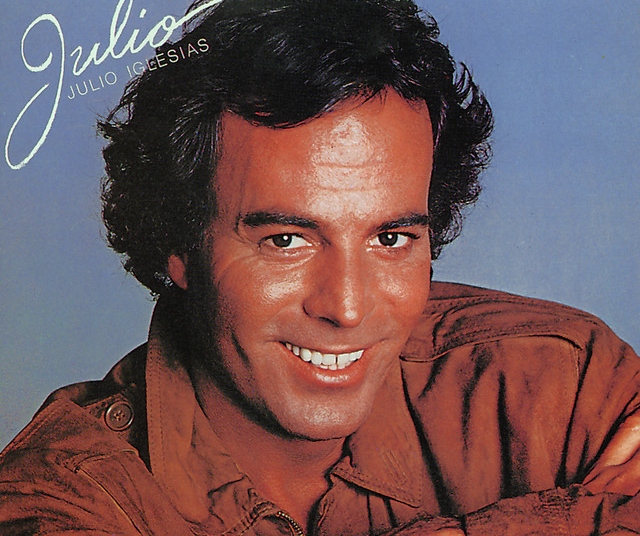
With the very serious accusations against Julio Iglesias – which could put him on the bench – many have “an idol fallen.” What a surprise, it turns out that the idols were smoke. That’s what Xoel López sings about in his song ‘Sombras chinas’, and it is inevitable to think about so many fallen idols of recent years. And there is no need to go to those who, like Michael Jackson, are already dead, nor to figures who have committed crimes. It is enough for them to defend values extremely opposite to yours, like Róisín Murphy denying the existence of trans people or Nicki Minaj suddenly embracing the American extreme right.
No amount of fame or power should shield Julio Iglesias – who is already preparing his defense and denying the facts – nor any artist, no matter how “universal” he may be, from being held accountable (legally and publicly). Even so, there has been no shortage of friends who are very close to Iglesias and have come to his defense in the media. Ana Obregón has tried to sow doubt by asking if Rebeca and Laura have “paid” for their statements, while Jaime Peñafiel has described the accusations as “scalawags.” You don’t know if they say such nonsense seriously or just to provoke: it is known that certain television programs feed on viral and sensationalism.
Isabel Díaz Ayuso has taken the cake by raising the issue of Iran when it was irrelevant and ensuring that the Community of Madrid will not contribute to the “discredit” of the “most universal” Spanish artist by withdrawing his distinctions, as Rita Maestre has proposed, for example. Julio Iglesias has been Madrid’s Favorite Son since February 2015, when Ana Botella gave him the title for “his brilliant and meritorious internationally recognized artistic career.”
The tagline of the “universal artist” is a bit lazy, especially because it reveals a certain complex with Spanishness, as if to be a worthy Spaniard you had to be “universal” or recognized on an international scale. Furthermore, the expression sounds very old-fashioned: today being universal is the norm. Many Spanish artists are, and it is not necessary to go back to his son Enrique, but for example to Rosalía or Ana de Armas.
Worse still, Ayuso’s words sound worryingly disconnected from reality, because here it is appropriate to separate not the work from the artist, but the artist from the person. What is recognized with titles is a cultural contribution, and what is being talked about now is alleged sexual assaults that occurred not 30 or 25 years ago and that could have expired, but between 2021 and 2022: nothing ago. MeToo emerged in 2017 and the Spanish music industry is still waiting for it.
What is also worrying is the way in which the “universality” of Julio Iglesias, his iconicity and fame, for some should shield him from being accused of behavior that is no longer questionable, but potentially criminal. Two things come into play here: rape culture, which tries to discredit victims by casting doubt on their accusations, and the influence or power of the artist as a symbol, the way his artistic prestige influences public perception, as if it makes him immune to any attack from the outside. And, even worse, as if these attacks were not only unfair, but also impossible.
Even Alberto Núñez Feijóo, President of the PP, has distanced himself from Ayuso’s statements, who argues that the accusations are a “montage” by the right, the typical Trumpist strategy of creating conspiracy theories to win over far-right voters. I don’t believe that she is not the least bit worried about the accusations leveled at her friend and musical idol, especially since the images of him kissing women at concerts or television shows apparently without their consent, which are going viral in the last few hours, would be enough today to generate a considerable national scandal. It was more Rubiales than Rubiales.
In part – only in part – I understand the resistance that many put to this type of denunciation of public figures. I can’t be the only one who, these days, has remembered Rigoberta Bandini’s great song, ‘Julio Iglesias’, which was totally nostalgic. Julio Iglesias has been linked to a national identity and his fall hurts. Accepting that a character we admire is problematic is difficult; it requires going through discomfort. But it hurts more to hear the statements of the alleged victims. We can recognize the presumption of innocence of Julio Iglesias and the right of the victims to be heard: both things, simultaneously.
I don’t know if it is premature to withdraw titles from Julio Iglesias, although Yolanda Díaz is committed to doing so as an “exemplary” action, but I don’t know, I’m sure that people really care about this. The debate that has opened reflects a larger problem: in Spain, only 11% of women who have suffered sexual assaults report them, according to the XV Annual Report of the State Observatory of Violence against Women 2021, cited by my colleague Mireia Pería in her article on abuses in the music industry published in our 2023 Yearbook. That same text indicated that, of the 40.4% of women who had suffered sexual harassment, only 2.5% had reported it.
The article also reported the creation of an Instagram account to anonymously report cases of sexual harassment or assault within the music industry. Pería recalled that in Spain there has never been a true “#MeToo” in music, which has allowed many notable figures (always anonymously) to continue working without public consequences, while the victims live with the consequences. Zahara appealed to this at the Ruido 2024 Awards, asking for more journalistic investigation in this area.
So this matter is not just about Julio Iglesias. This is about the fact that if Julio Iglesias can be uncovered, if the “most universal” and powerful Spanish artist can fall, so can and should the others. And no, it is not about destroying reputations or “ruining” anyone’s life just for the sake of it, but about understanding that we do not want public figures – cultural or any field – who violate human rights and their power, influence and cultural symbolism protect them.
