‘Bitter Christmas’ was until today a ranchero bolero by Chavela Vargas, written by José Alfredo Jiménez, about someone who prefers to “kill us little by little” instead of “abandon us” all at once. The only abandonment that Pedro Almodóvar fears is that of his imagination, that of his ability to create. ‘Bitter Christmas’ is from now on a film that tells us about anxiety or the death of a child, yes, but above all about the muses.
In this film, the real “bitterness” is what an author can feel when the time comes to sit down to write, with the cursor pulsating non-stop, waiting for you to find a story, the words and a suitable ending, after 23 films. ‘Bitter Christmas’ tells us about feeling “swept away”, in reference to Zulueta’s masterpiece, in which Pedro dubbed a voice.
Almodóvar is 76 years old – last night he told ‘La Revuelta’ that for a time he used to take off 7 years. He feels like he doesn’t have that much time left, and that’s why, since the pandemic, he hasn’t stopped working a single day. ‘Bitter Christmas’ takes up an old story from his book ‘The Last Dream’, but only to twist it to the point of exhaustion. No, this is not a movie about a handsome firefighter, nor is Patrick Criado exactly the new Liberto Rabal.
Since ‘All About My Mother’, the key to Pedro Almodóvar’s “adult cinema” is always in the metanarrative, in the story within the story, which can emerge through a trip to the past (‘Volver’), and/or through autofiction (‘Pain and Glory’). ‘Bitter Christmas’, which seems like a film about the director played by Bárbara Lennie, but is a film about the director played by Leonardo Sbaraglia, is actually a film about Almodóvar. ‘Pain and Glory’ is, clearly, its first cousin.
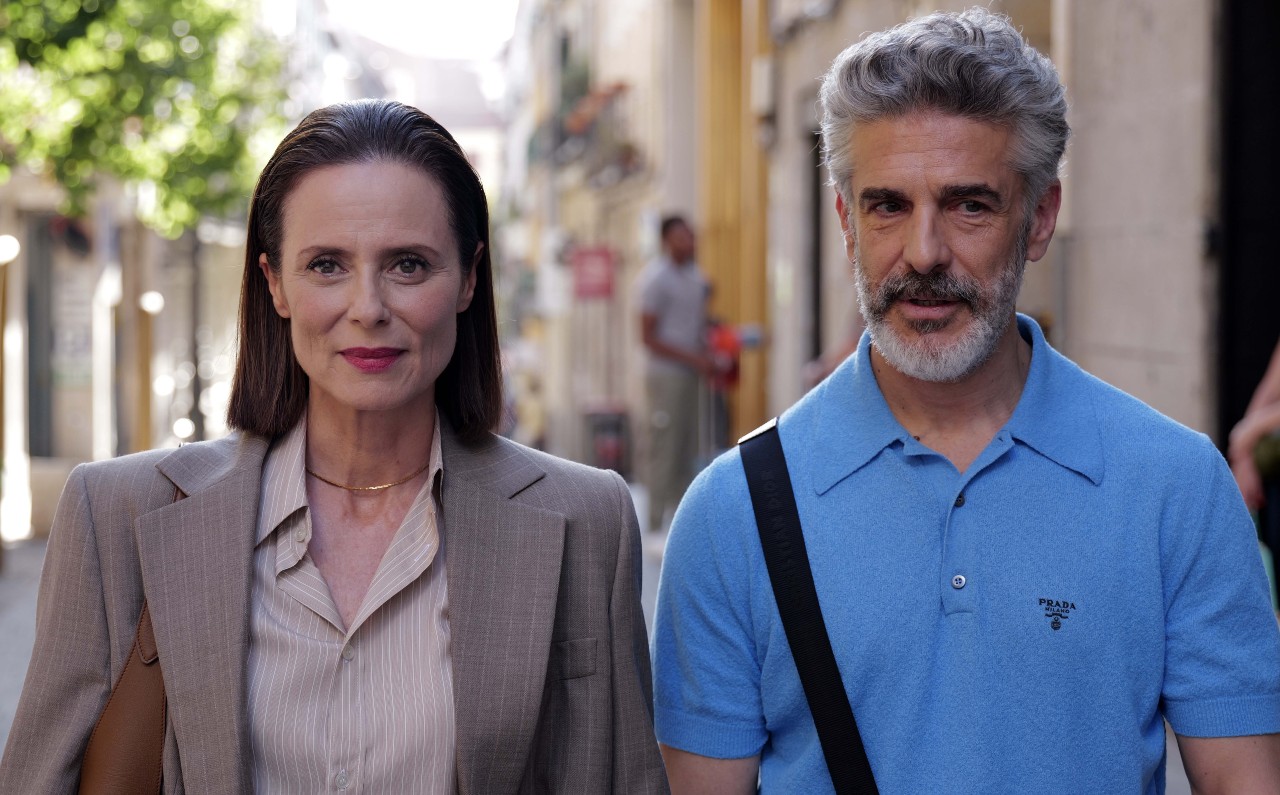
In this game of autofiction decorated because reality is very boring and “fiction is always necessary”, there are very interesting reflections and not only about the creative process. There is a very important one about mental health: just 20 years ago we had no idea what a panic attack was. But there is also room for humor. The first part of the film has a certain amount of comedy and the last part, which is more bitter, includes a dramatic scene in which Sbaraglia/Almodóvar faces all his negative criticism with a certain sarcasm, through the character of Aitana Sánchez Gijón, who plays the person who has been in charge of solving all his shit for 20 years.
That scene is already fundamental in Almodóvar’s filmography for all the layers it contains. First of all, ethics: how far can we go with autofiction? What moral responsibility does the author have towards his environment? What commitment can you make with the privacy of your loved ones? And better: is it worse that they don’t talk about you because you are so insignificant that yours “can wait”? At the same time, Almodóvar laughs at all the criticism that is usually made of his cinema, not by Boyero, but by the people who care about him and us: who no longer walks on the streets, who has lost the notion of reality, who repeats himself, and who is worth using his mother.
The final conclusion is that we don’t know that much about Almodóvar besides the fact that he loved his mother very much and is probably the best patriot of this country, the one who loves Spain the most and has sold the Spain brand. There is a very large photo, with many people, in the middle of all this. And yet, this self-portrait from ‘Bitter Christmas’ once again depicts him as an extremely lonely being and concerned only with his legacy, which on the other hand may have a lot to do with the depth of his melomania. Alberto Iglesias repeats himself in tune with all the self-references in the film, but pay attention to that last vocal take by Vargas in ‘La Llorona’, pay attention to Amaia servingand attention to ‘Libertango’ too.
There are endless tangential topics that arise in this script: what a cult film is and how many minutes the prestige of a living artist lasts. Spoiler: there are 5. But above all this, Almodóvar has once again triumphed in what he has been best at lately: formally. There is a moment when ‘Bitter Christmas’ seems like a draft, with blurred characters, vase men, situations that go nowhere… and it turns out that it has a meaning.
