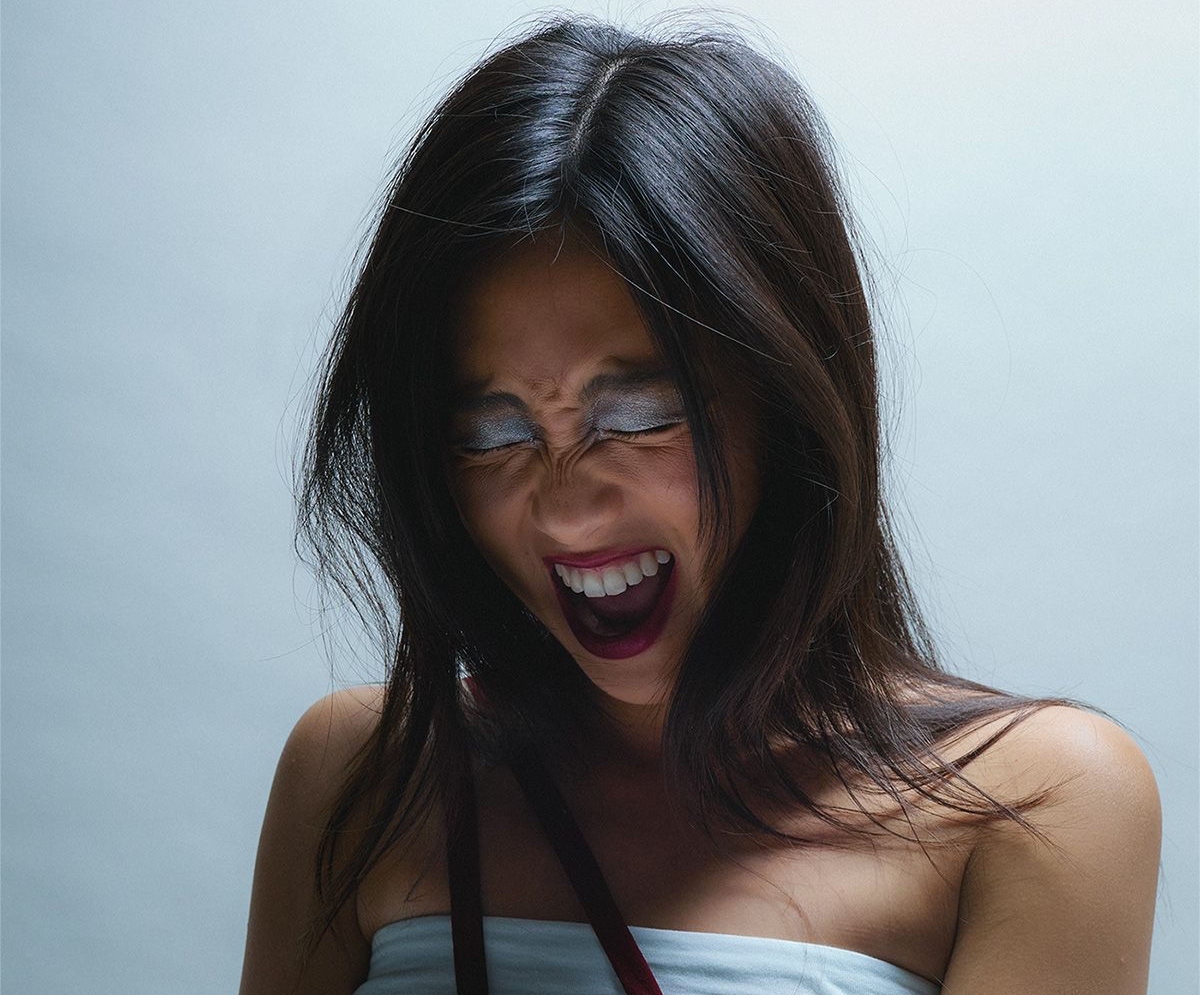
We met Sarah Kinsley a few years ago for her viral hit ‘The King’, although we also recommend her spectacular single ‘Lovegod’, very representative of the style of orchestral pop that we later found on her 2024 debut, ‘Escaper’.
Kinsley’s profile in pop is especially interesting for two reasons. The first is his classical training. The second, her role as producer of all her music. After March 8 in which several female artists, such as Alba Morena, have claimed the role of female producers in music, Sarah Kinsley also has things to say.
He tells us about them following the publication of his EP ‘Fleeting’, where, together with his collaborator Jake Aron, he evolves towards a more pop and electronic sound that in cuts like ‘Truth of Pursuit’ clearly refers to the most viral Kate Bush.
Your EP ‘Fleeting’ just came out, and it hasn’t been that long since your debut ‘Escaper’. What are your feelings after the launch? Are they related in any way?
This is actually the fifth EP I’ve released. I love the EP format for releasing music because it’s more accessible to people. I am very happy: the reception has been very good. As a songwriter, I usually don’t know exactly what my records are about until I finish them. This EP took shape over many months, and only later did I realize that it was about desire and longing, especially when people started pointing out that those were the themes that appeared in the songs.
I don’t know if you conceived this EP as a simple collection of songs or as the distillation of a specific vision that you wanted to express, but in a condensed way.
I just wrote songs, like bursts of emotion and expression based on things that were happening in my life. Almost unconsciously, the EP took shape on its own.
Here you seem to explore more synthetic sounds than in your previous work. Were you trying to get away from the sound of your debut a bit?
My collaborator Jake and I were much bolder with our decisions, leaning toward synth sounds that really stand out. Music production is complicated because you have to create space within a song for everything to fit. The bolder you are, the more at risk you are of missing some of the more subtle elements, the ones that are more diffuse or harder to hear. On songs like ‘Lonely Touch’ we tried to take it as far as possible so that it became something really great. I hadn’t taken those kinds of risks in a while, but it was also about experimenting and having fun.
What does ‘Truth of Pursuit’ mean to you?
This song is about being completely trapped by a person. I think infatuation is a very powerful feeling because it is disguised as love, but in reality it has no intention of becoming love. That emotional state is very intense, and it is something I have experienced many times. I was writing about the truth of chasing someone or something and discovering that you can still end up feeling very alone and empty. The first part of the song talks about being trapped in that feeling, and the second is about becoming aware of how harmful it can be.
How has your classical training influenced your career as a composer?
When I was younger I never thought it would be possible for me to become a singer. When you grow up playing classical music there are very defined paths: go to the conservatory, play in a philharmonic, become a conductor, composer, teacher or musical researcher. It’s a very linear world, and I followed that path for the first 18 years of my life.
Then I went to university and suddenly found myself surrounded by musicians completely different from me. They were much freer in their thinking: they played in basements, in churches, in pretty wild DIY concerts. I was fascinated by that world. Suddenly I had two completely opposite paths before me.
At first I felt like I had to give up who I was to become the artist I wanted to be. I even felt a little ridiculous, because all my classical training didn’t really help me understand how to write songs. I understood melody and harmony, but I was caught up in all the rules and binaries of classical music: what chords were correct, what intervals worked… I didn’t know how to connect with emotion. I was beginning to embrace things I had been taught to avoid, and over time I realized that those two worlds were much more intertwined than I thought. But it took me a while to understand it.
Do you approach composition trying to break the rules and expectations that your classical training left you with?
I try. If I sit down at the piano, my brain already knows all the possible combinations of what I could play to make it sound good, and sometimes I hate that because I feel like there’s no real freedom from my training. The “correct” chord progressions I have in my head are very Western and very specific. So now I try to be freer with my intention: maybe touch something I didn’t expect or move in a direction my younger self would never have taken. I try to surprise myself, although it’s not always easy.
What music did you listen to when you were growing up? Or did you only listen to classical music?
I played classical music all the time, but I didn’t really listen to it much. I listened to a lot of music from the 70s and 80s. My father played me a lot of U2, ABBA, The Carpenters or Foreigner… There was also a Madonna tape lying around.
There’s a viral video of Mary J. Blige where she complains that some collaborators – including Diddy, but we’re going to ignore that – take the soul out of her music with mixing and production. How do you approach the production, trying to preserve that emotion you talked about before?
I quite agree with what he says. When you work with a hundred voice takes and many layers, a lot of rawness is lost. You can leave the studio completely exhausted after working on a song like that, all the artistic energy you have goes into that. I think in the end it all comes down to intuition and knowing what feels right for you, without falling completely into what is considered “presentable” or what your collaborators say.
But I also don’t know if there is such a thing as being too crude. One of my favorite musicians is Nick Drake, and all of his recordings are imperfect in some way. But that is precisely what makes them perfect for me. The instrumentation is very minimal and the songs are very intimate, and that’s exactly who he was. He captured the feeling because he moved away from perfection.
The percentage of women producers remains very low. Do you feel a responsibility to be visible in that space?
I think it’s more important than ever. Even in the case of someone like Addison Rae, who only had two female producers, that still surprises a lot of people. I feel a responsibility to myself, but I am also a very perfectionist and many times I just want to do it myself. It’s a tricky balance between tokenism and real representation.
«95% of the composers I studied at university were white men who had died and who came from Eastern Europe or England»
Catherine Anne Davies, who publishes as The Anchoress, says that much of her job as a producer is to act as a kind of therapist, and that women open up vulnerability in artists in a way that men don’t always manage. Do you feel identified with that idea?
I agree with this idea of being a bit of a therapist. In fact, some of the people I’ve worked with have also ended up almost being my therapists. You can’t make a song with an artist without really understanding what it’s about and what’s behind it.
Do you think people really understand the job of a producer?
I think the definitions can be confusing because the role of the producer changes a lot from one album to another. I work with Jake and sometimes I bring songs that are already quite developed. In other cases, the producer is practically the brains behind everything. Sometimes the artist is the voice and the vehicle, while the producers build everything else.
I also think that sometimes too much credit is given to someone other than the artist, but if you’re not in the room you don’t really know who made each decision. Depending on the case, it can be undervalued or overvalued. I like to think that, most of the time, it is a fairly balanced process. The producer can be in charge of finding the sound, but it depends a lot on the artist.
Why do you think there are so few women in production roles? What would it take for the industry to catch up?
This happens in many industries, not just music. It’s just not presented as an option. When I was younger, if I wanted to be a musician, what I saw in movies or in the media was that I had to be a singer, a performer, or some kind of vehicle for other people’s ideas.
95% of the composers I studied at the university were dead white men who came from Eastern Europe or England. A hundred years ago it wasn’t even an option.
I think the fact that it’s still surprising to see female bands or female sports teams says a lot. The day it stops surprising us will be when things have truly changed. It’s about encouraging and giving space without treating it as something exceptional: production companies exist, and there are more and more who make their own music or work on other projects as producers or mixers. I, for one, feel hopeful and optimistic that things will change in the future.
