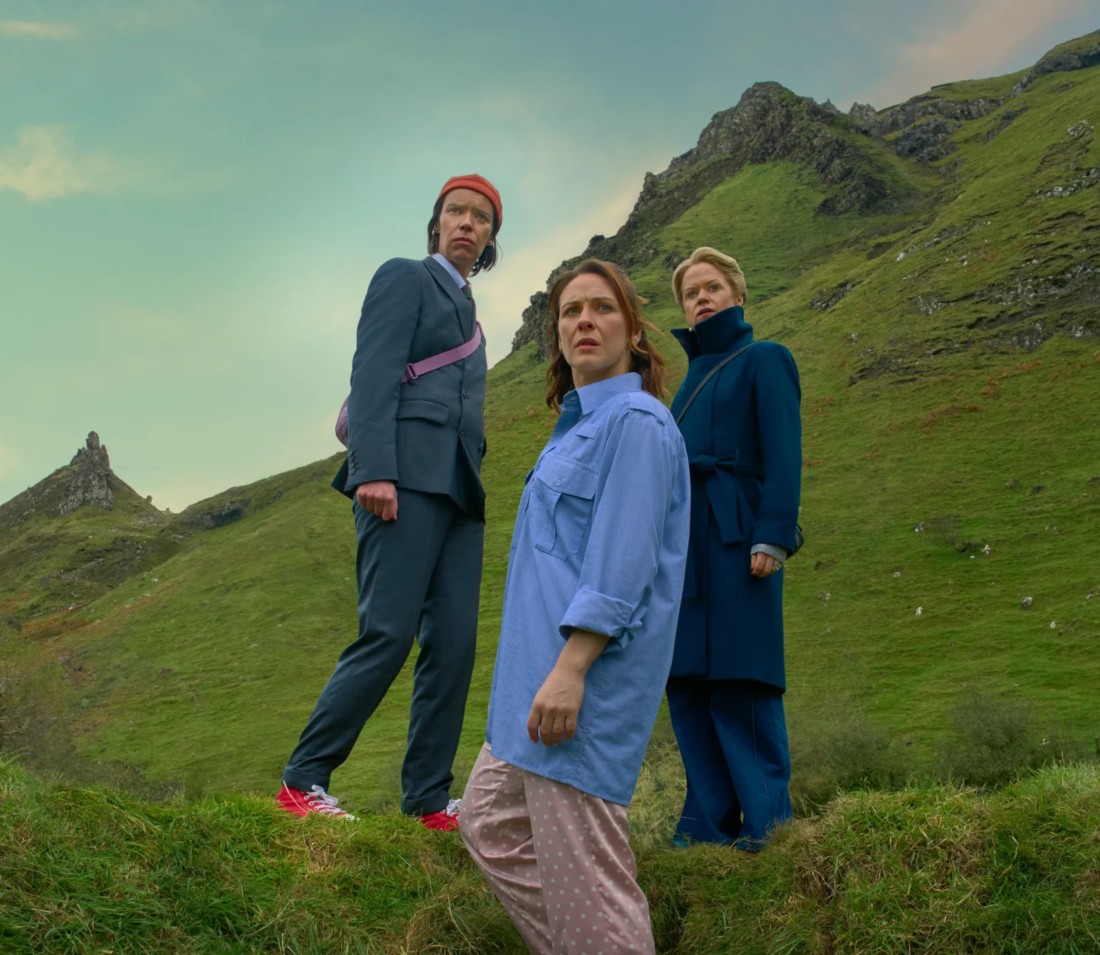
In ‘Derry Girls’, its creator, Lisa McGee, demonstrated a remarkable ability to intertwine two different tones and registers, socio-political drama and teenage comedy, within the same story, ensuring that both coexist without overshadowing each other and that the story works simultaneously on two dramatic planes. Well, in his new series, ‘How to Get to Heaven from Belfast’ (Netflix), McGee performs a triple somersault: combining humor, drama and, also, mystery. And everything works wonderfully again.
The premise is simple: what would happen if some ‘Derry Girls’ style friends had grown up and were forced to investigate a crime related to their youth? The series follows three Northern Irish women in the midst of a mid-life crisis (the trio of actresses is fabulous) who, as in ‘Yellowjackets’ (with which it shares more than one parallel), carry a dark secret from when they were teenagers and inseparable friends.
Their arrival in the fictional town of Knockdara, populated by eccentric characters (à la ‘Doctor in Alaska’ or ‘Twin Peaks’), sets in motion a story that combines criminal intrigue (with elements of rural noir, folk horror and cozy crime), with a generational drama about the wounds of the past, the kind that fester when least expected, and about the frustrations of the present, very different from the one they had imagined when they were young.
All of this is crossed by a very effective humor with multiple registers: verbal, with quick and witty dialogues; physical, at times close to slapstick; black, linked to the criminal plot itself; romantic, embodied in the character of the police officer; referential, with nods to the teenage pop music of the nineties and two thousand (B*Witched, Five, tATu, Las Ketchup) and to Hitchcock’s universe (the lighthouse, the motel); and also meta, by playing with the idea that one of the protagonists is a scriptwriter for a police series.
Along with McGee, two common names in recent British fiction stand out in directing duties: George Kane, director of the Phoebe Waller-Bridge series ‘Crashing’ and several episodes of ‘Inside No. 9’, and Michael Lennox, director of the miniseries ‘Say Nothing’ and ‘Derry Girls’ itself. I mention them because ‘How to Get to Heaven from Belfast’ also stands out for its remarkable staging.
The series is full of expressive ideas as powerful as the dance sequence in the first episode, in which the protagonists meet their teenage selves, or the one in which we witness a scene from the past while listening to the audio recorded on a recorder in the present, thus overlapping two timelines.
They are two examples of how the directors do not use formal resources only to illustrate the script in a routine manner, but to poetically explore the feelings that beat under an apparently light and carefree story, but impregnated with a deep melancholy in the face of the passage of time.
