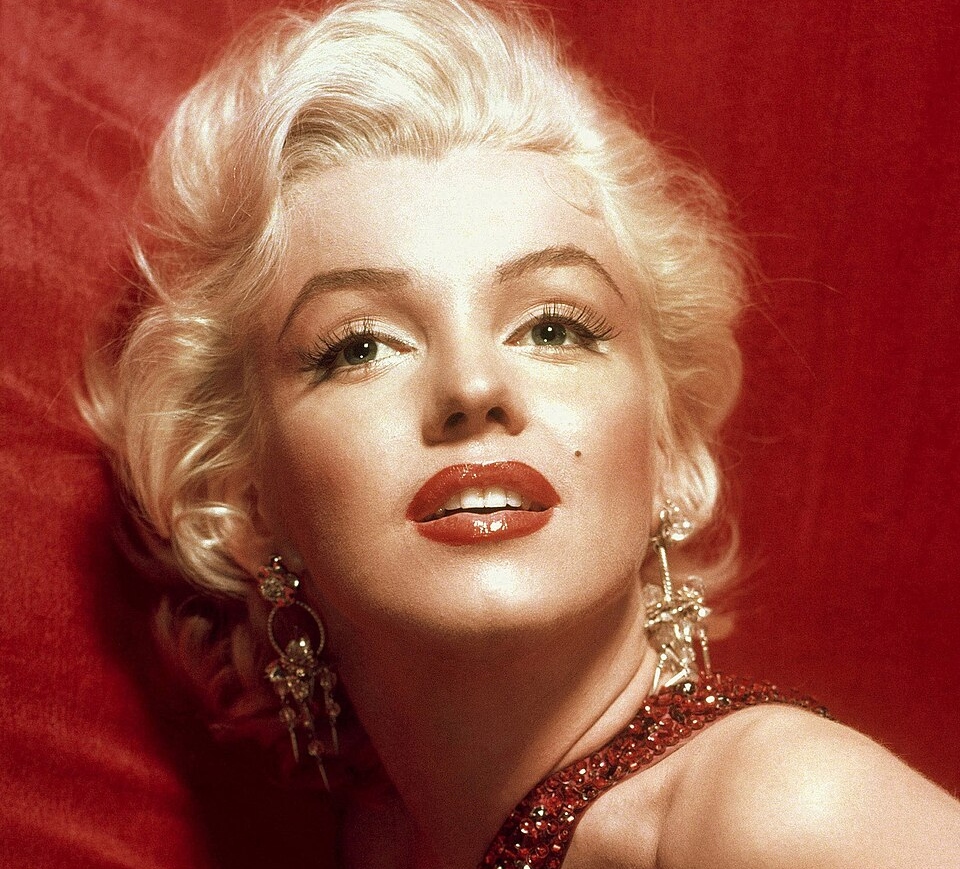
In recent weeks, the Instagram feed has been an ocean of images of Marilyn Monroe, fed by likes to shared images that celebrate the 100th anniversary of her birth. It is incredible to think that he could be with us today, like David Attenborough, who has just turned a century old, although it is clear that the comparison is very unlikely. Historically, the figure of Monroe is not that far away, but it seems that way, because every time I see an image of her it gives me the feeling of seeing a historical figure and not a human person who existed.
We have reproduced her image so much over the past few decades – from Warhol to Madonna and beyond – that Monroe has become more of her own symbol than someone you perceive as real. Every day a photo of him appears, a new facet that you had not seen. It seems that the more images you see, the less you know her. And at the same time, when you see her in a movie, in an interview or simply in images signing autographs, filming scenes or attending to the press, the opposite feeling appears: that of knowing her, that of even being able to be her friend, that you would understand her better than the society that elevated her and then did not protect her.
Marilyn Monroe died in 1962, but I can think of few public figures with a posthumous life as long as hers. Only historical figures like Cleopatra or Napoleon Bonaparte come to mind. Since then, Monroe has survived as an incessant reproduction of herself, which is actually millions of images and reinterpretations, all avoiding the possibility of pinning down the “real” Marilyn Monroe. Glamorous, vulnerable, accessible and unattainable at the same time, it is a reflection of our desires, aspirations and dreams.
In the decades since her death we have gotten closer to the “real” Marilyn: we have been able to appreciate her talent, her most cultured side, the fact that, like all of us, she was a complex human being. But that coexists with something else: his posthumous cultural life is not an extension of his career, but a production completely separate from it. Monroe simply stops participating in it: her life is no longer necessary, because it is reproduced by the media ad infinitum.
When she was alive, her life was extremely directed, stylized, controlled and lit like a film set. After her death, her images and contradictions become, as Lena Dunham rightly indicates in a recent interview, cultural material that continues to be reinterpreted and circulated. Perhaps that is why Marilyn Monroe continues to fascinate: because the more her image circulates, the more it is dehumanized from the real person who was hiding behind the character, the more we want to know who she was. And the key is that the mystery will never be solved, because we will never truly know her. We will only know its thousand reproductions, and those that come within the next century.
